00

Vial & Vale

Helping beauty shoppers find sustainable products that actually work, without trial and error

Helping beauty shoppers find sustainable products that actually work, without trial and error

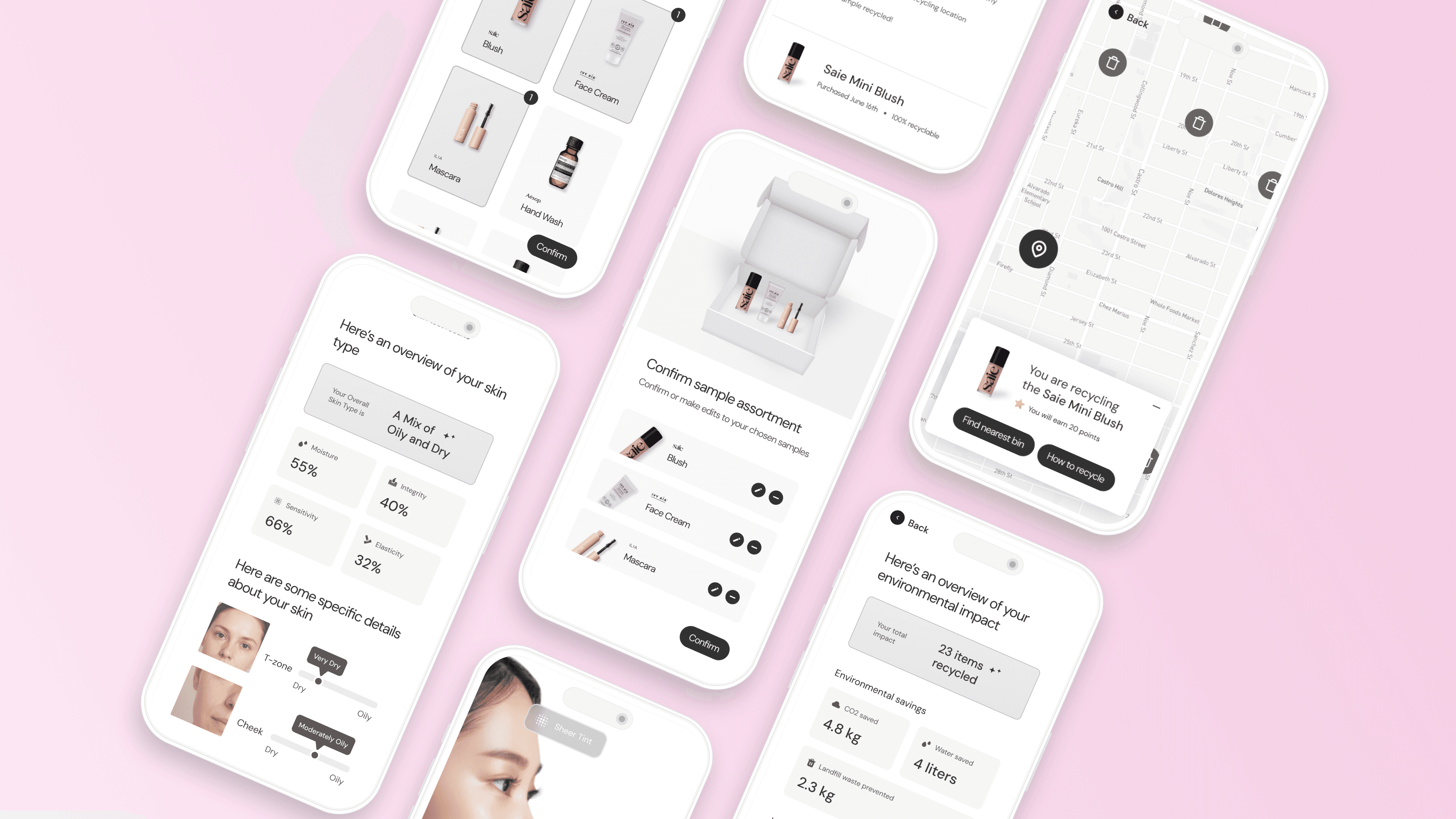
For my design innovation course at UC Berkeley, my team and I designed an end-to-end mobile experience that addresses how we might reduce waste and frustration in the beauty industry by helping users find products that actually work for them, the first time around.

Role

Product Designer

Team

5 designers

Timeline

Timeline

February to

May 2025

Skills

User Research
Product Strategy
Prototyping
Usability Testing

Skills

February to

May 2025

Product Designer

User Research
Product Strategy
Prototyping
Usability Testing

01 PROBLEM

Beauty consumers face emotional and financial exhaustion from trial-and-error shopping. Consumers frequently waste money and generate excess packaging by purchasing full-size skincare products that don’t work for them, creating frustration and environmental strain.

How might we help beauty consumer discover sustainable products that fit their needs on the first try?

02 RESEARCH

We interviewed 5 participants aged 14-31 to understand their skincare shopping behaviors and pain points.

Here's what we found, organized on an affinity map:
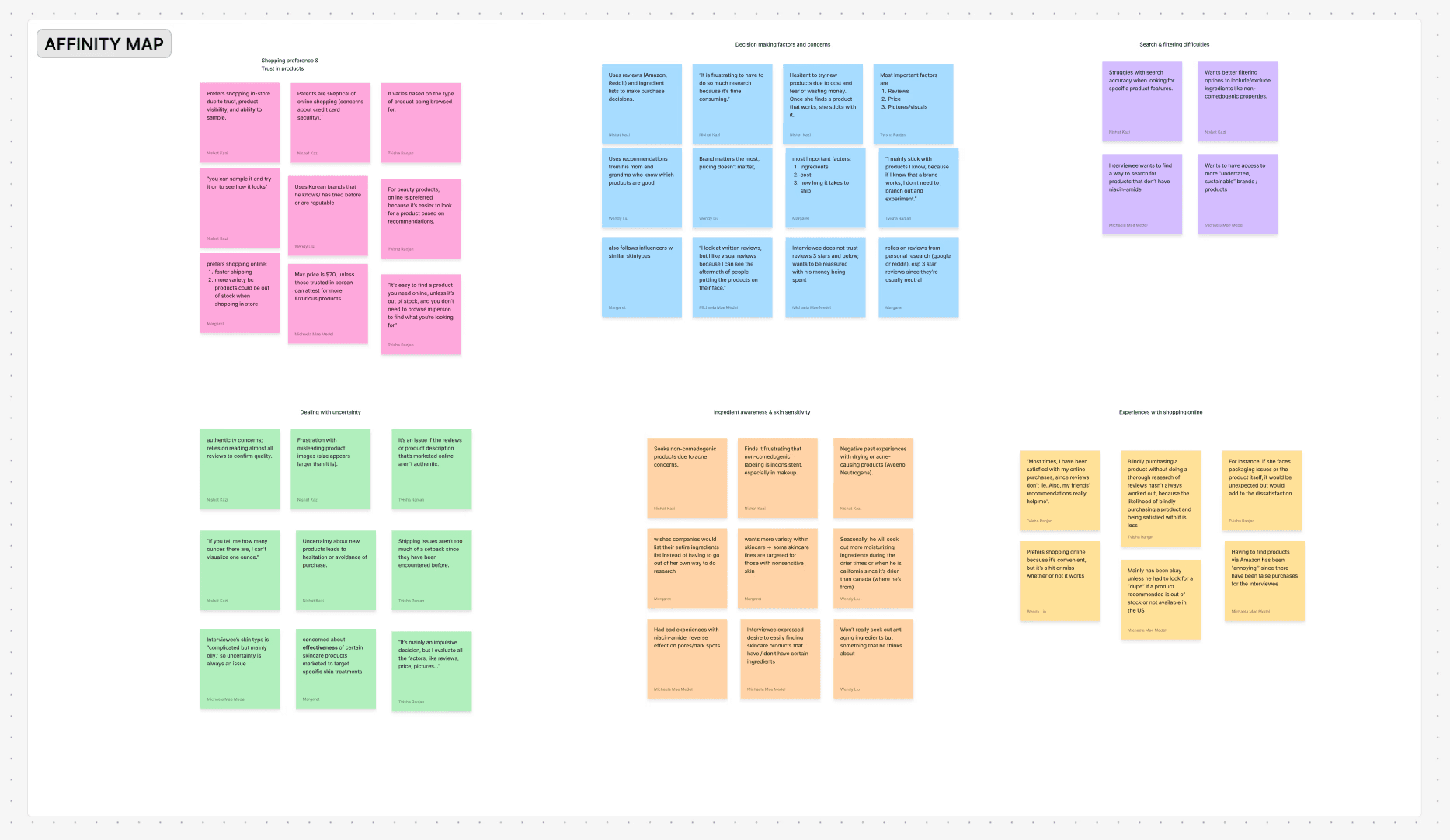
We drew some key insights from our interviews

Users rely on guesswork when buying products online, leading to dissatisfaction and waste.

1. Trial-and-error leads to waste

2. Hidden demand for sustainability

2. Hidden demand for sustainability

Users want sustainable brands but struggle to find reliable options that meet their needs.

3. There's a transparency gap

Limited sampling and unclear ingredient information hinder confident product decisions.

Users rely on guesswork when buying beauty products online, resulting in dissatisfaction and unnecessary disposal of products that don't work.

Users want sustainable brands align with their values but struggle to find reliable eco-friendly options that meet their specific needs.

3. There's a transparency gap

Limited access to samples and unclear ingredient information block confident decision-making.

1. Trial-and-error leads to waste

03 OPPORTUNITY

Create a mobile platform that empowers beauty consumers to discover personalized, sustainable products on their first try.

Our research revealed that users want sustainable options but lack confidence in finding products that actually work for their skin.


We dug out a golden opportunity:

04 IDEATION & FIRST DESIGN ITERATION

We brainstormed solutions across three categories - dark horse (most bold), likely to please, and likely to work.
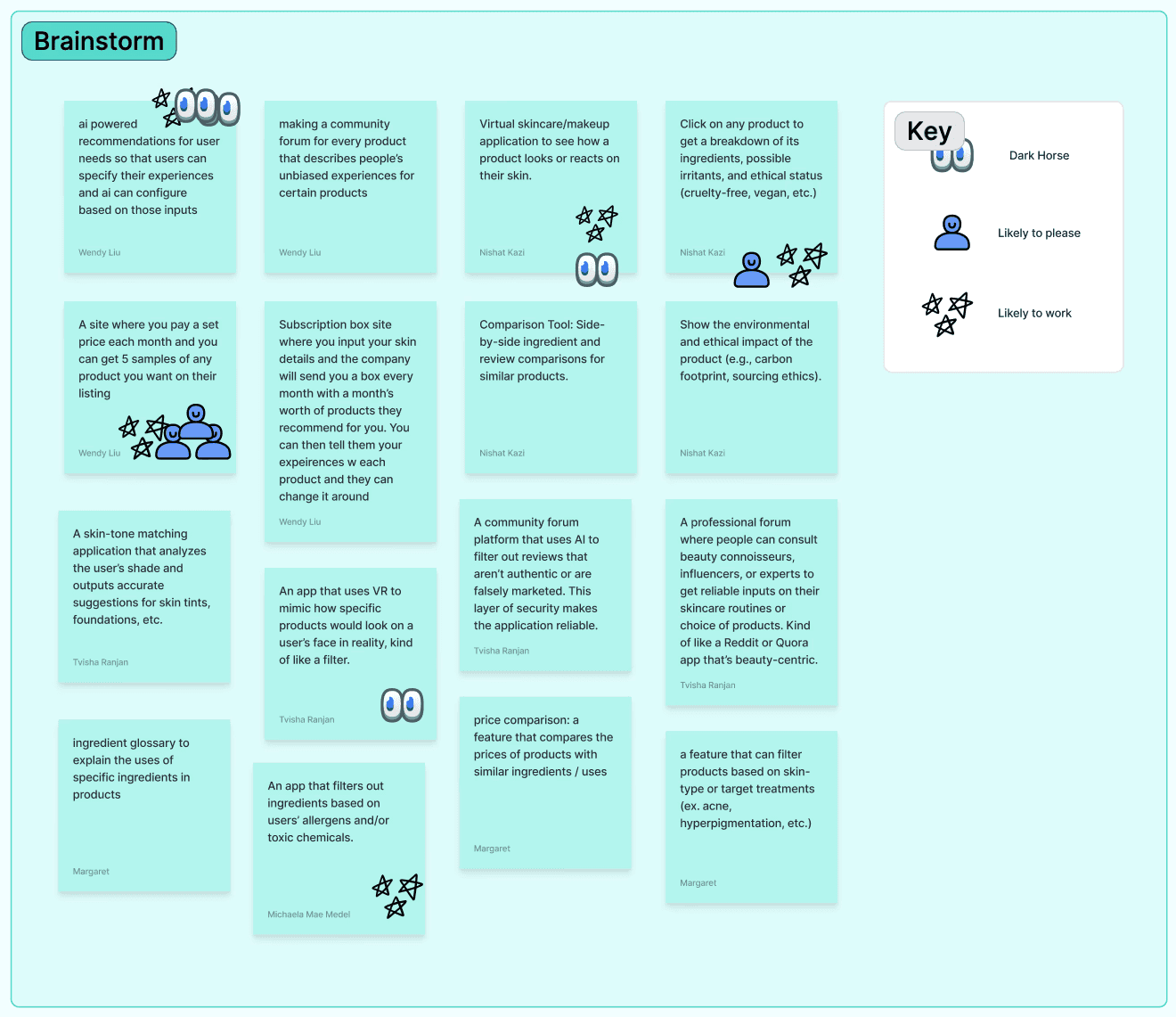
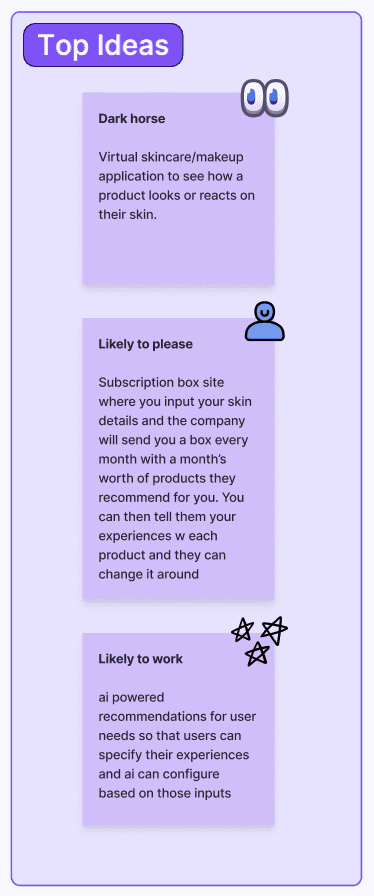
Here are three concepts we tested, along with our first design iteration.

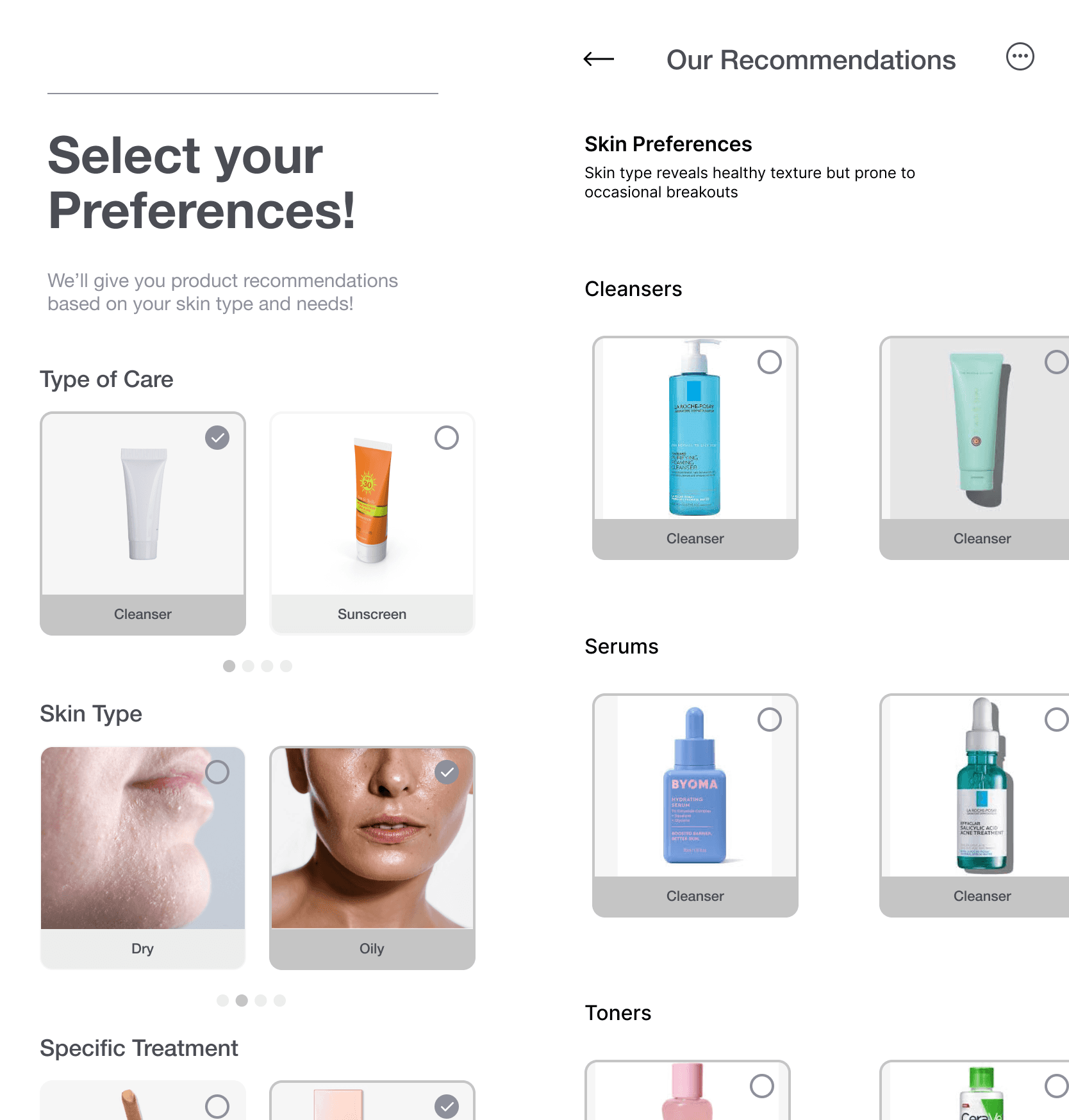
AI-Powered Recommendations

Personalized product matching based on skin concerns and sustainability preferences
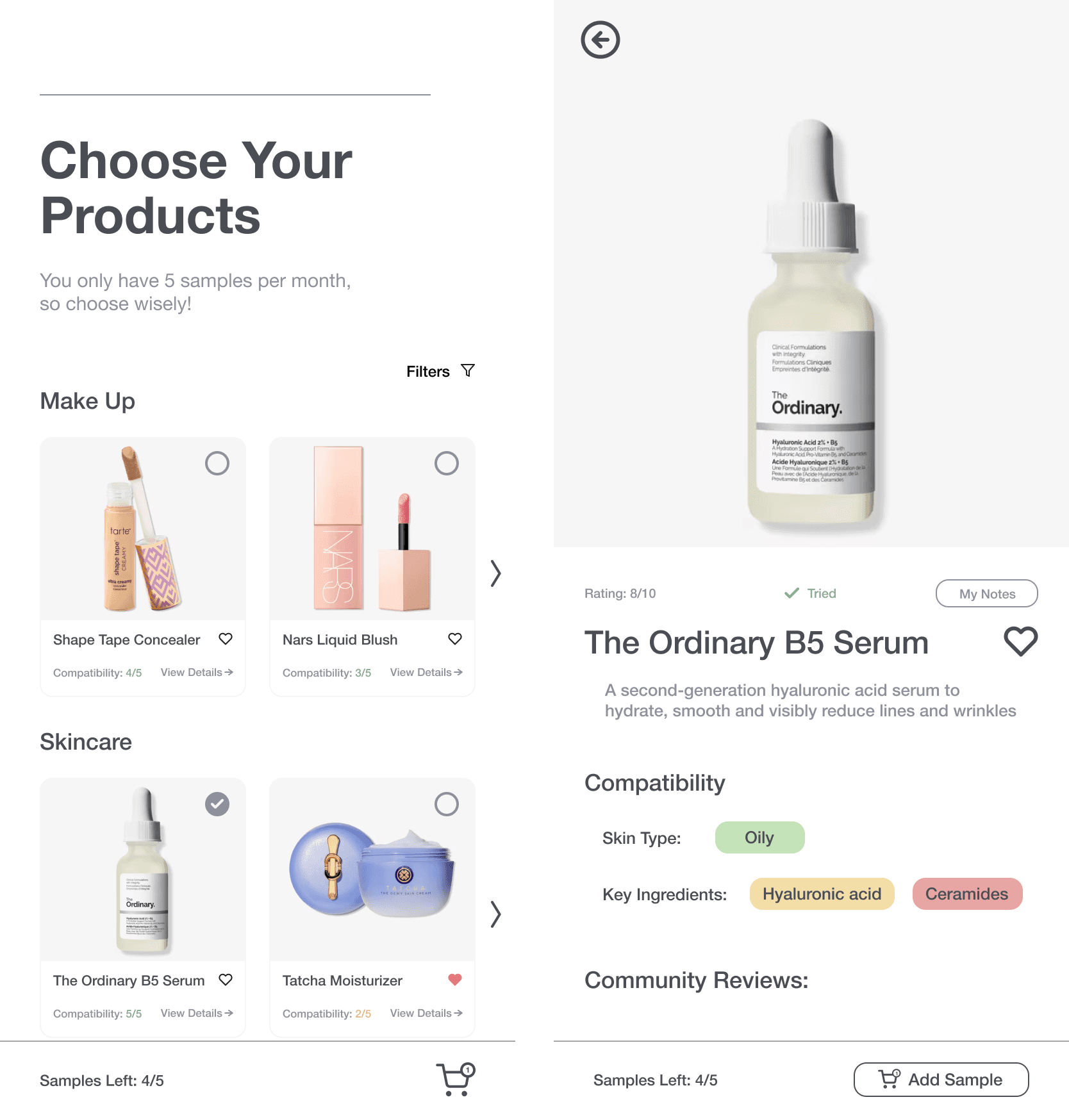
Subscription Sample Box

Curated products based on skin testing results to reduce commitment risk
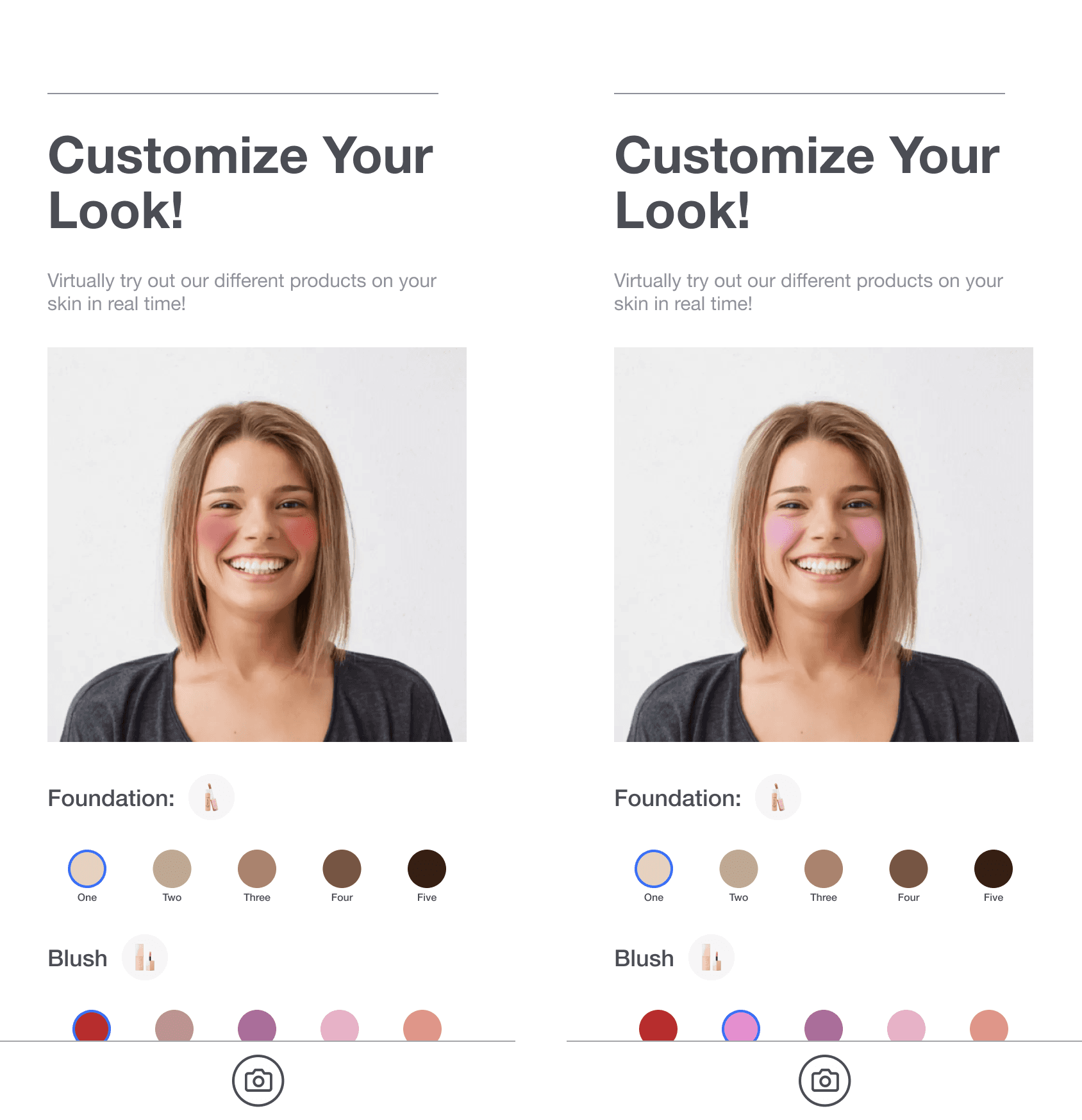
Virtual Try-On

VR-powered visualization of how products look and impact skin
05 INITIAL USER TESTING

We ran remote usability testing on our initial solutions with our original interviewees.


Some key insights were:

  • Sampling reduced decision anxiety and increased confidence

  • Virtual try-on was exciting but felt gimmicky without real skin impact data

Our insights revealed that trust, not personalization alone, was our core challenge.

We decided to integrate a recycling rewards system to promote sustainability and reinforce environmental impact.

"I'd feel more comfortable trying something new if I could test it first. Like, what if it breaks me out?" - Mark, 25

“The AR thing doesn't actually tell me if the product will work for my skin. Not too sure if I’ll actually use it.” - Maira, 15

05 THE FINAL DESIGN
FEATURE 1

FEATURE 1

Discover products built for you, validated by you

Discover products built for you, validated by you

  • Short skin test to assess concerns and values

  • Short skin test to assess concerns and values

  • Tailored product feed filtered by skin type, concerns, and eco-preferences

  • Tailored product feed filtered by skin type, concerns, and eco-preferences

  • Detailed sourcing and ingredient transparency

  • Detailed sourcing and ingredient transparency

FEATURE 2

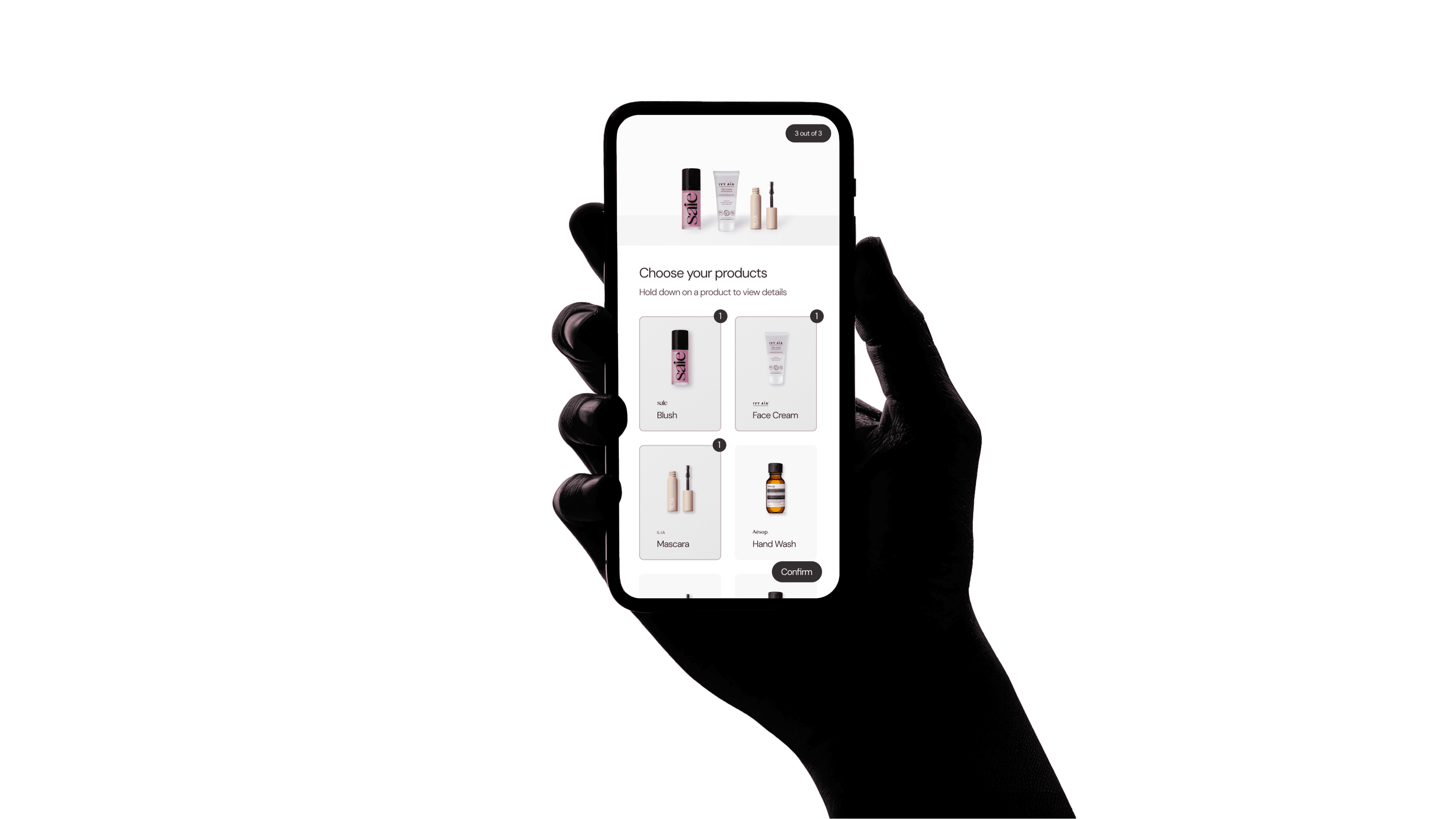
Sample products before committing

  • Personalized sample box generated from skin test results

  • Try up to 3 products risk-free before buying

  • Comprehensive, transparent descriptions about brand and product

FEATURE 3

Recycle your empty samples and earn rewards

  • Clear recycling guides for each product type

  • Points system incentivizing sustainable disposal

  • Dashboard showing environmental impact of user's recycling efforts

FEATURE 2

Sample products before committing

  • Short skin test to assess specific skin concerns and sustainability values

  • Tailored product feed filtered by skin type, concerns, and eco-preferences

  • Detailed sourcing and ingredient transparency for every product

FEATURE 3

Recycle your empty samples and earn rewards

  • Return empty product packaging to earn points toward future purchases

  • Clear recycling guides for each product type

  • Dashboard showing environmental impact of user's recycling efforts

Introducing Vial & Vale — your sustainable skincare hub

We created a mobile experience that simplifies sustainable beauty.

06 REFLECTION

Test with broader demographics

Our user group skewed young (14-31), so testing with older users might reveal broader insights.

Prototype the recycling logistic

Mapping out shipping and collection in the digital experience would make the process more feasible.

If I could do it again…

06 REFLECTION

Trust is built through transparency and user control

Users engage more deeply with sustainability when it’s tied to clear actions and outcomes, rather than abstract messaging.

Sustainability must be actionable to feel meaningful

Confidence increases when users understand how decisions are made and feel empowered to guide the experience.

My biggest takeaways…

My biggest takeaways…

Trust is built through transparency and user control

Users engage more deeply with sustainability when it’s tied to clear actions and visible outcomes, not abstract messaging.

Sustainability must be actionable to feel meaningful

Confidence increases when users understand how decisions are made and feel empowered to guide the experience, rather than relying on opaque recommendations.

Prototype the recycling logistics

We designed the digital experience but didn't fully flesh out the return process. Mapping out shipping and collection would make the process more feasible.

Thank you!

Thanks for visiting!

Resume

Resume

tvranjan06@berkeley.edu

tvranjan06@berkeley.edu

LinkedIn

LinkedIn

Thanks for visiting!